top of page


Tempus 3D Blog
The latest product updates, news, and trends in Additive Manufacturing.
Search


Unlocking the Power of 3D Printing for Branded Merchandise
3D printing and branded merchandise


Bridging Arts and Architecture with 3D Printing Innovation
At its core, 3D printing is about possibility. It allows artists to push creative boundaries and communities to preserve architectural history. We’ve had the privilege of working on three projects that highlight how additive manufacturing supports both artistic expression and architectural storytelling.
Here’s a closer look at how 3D printing is shaping arts and architecture in meaningful ways.


February 2026 Newsletter
Tempus 3D's February recap newsletter, this month we focused on Industrial applications for 3D printing


Tempus 3D Expands Its Materials Portfolio with Tough 2000 Resin V1
Tempus 3D Expands Its Materials Portfolio with Tough 2000 Resin V1
At Tempus 3D, we’re continually expanding our material portfolio to help clients move from concept to production with confidence.
We’re pleased to announce that we are now offering Tough 2000 Resin V1 — a high-performance SLA material engineered for strong, stiff, and durable functional parts.
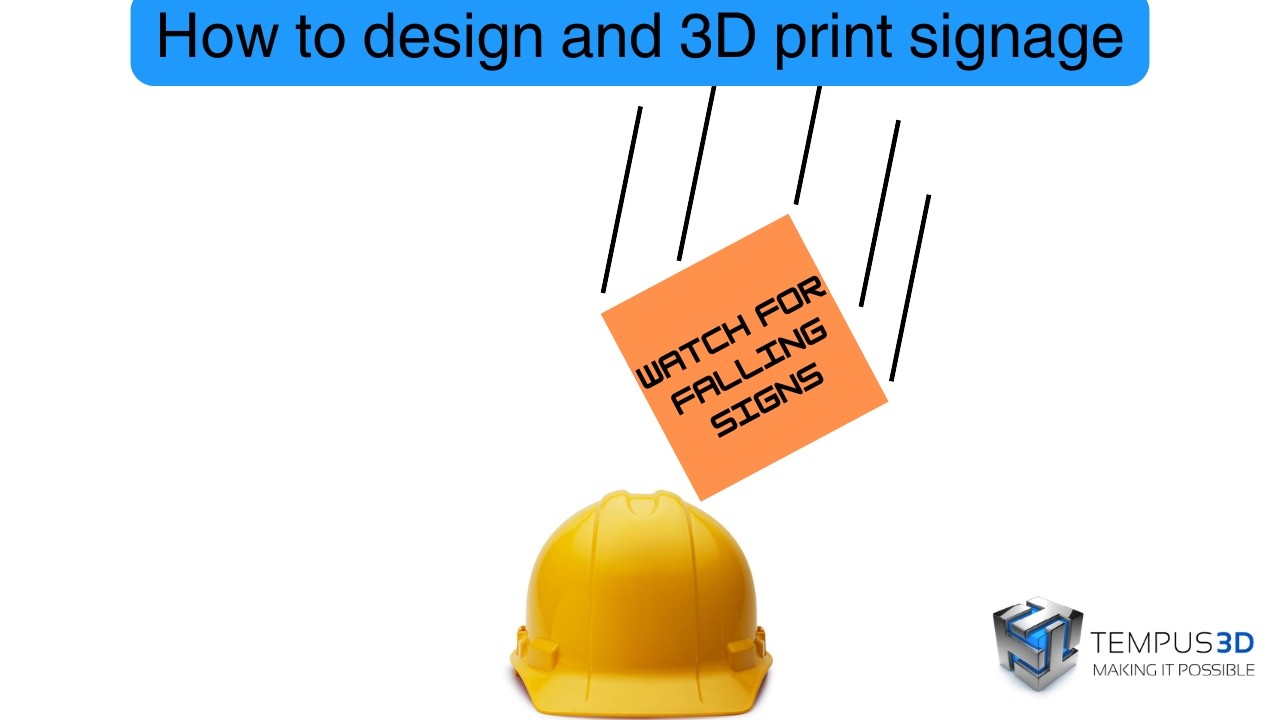
Designing and printing custom safety signs
I wanted to show off some of the signage we have been doing with our FDM printer. I detail my process step by step, from Canva to Makerlab to Bambu Studio
The makerlab tool that makes the magic happen can be found here
https://makerworld.com/en/makerlab/imageToKeychain?from=makerlab


Build. Break. Rebuild. Modular Robotics with 3D Printing
Robotics and automation are shifting toward a new design philosophy: machines must be lighter, modular, easily reconfigurable, and far quicker to deploy. At the same time, customers are demanding shorter development cycles, flexible automation cells, and systems that can adapt as their production needs evolve. This pressure has pushed engineering teams to embrace digital manufacturing workflows, particularly industrial 3D printing, as a core enabler of modular design and RMS


Robotics Part Consolidation - Optimized with 3D Printing
Robotics and automation systems are becoming increasingly complex—yet the market demand is trending in the opposite direction: lighter, more modular, more reliable machines with drastically shorter development cycles. To meet these pressures, engineering teams are turning toward digital manufacturing workflows, especially industrial 3D printing, to rethink how robotic components are designed and built.


Cerakote vs. Powder Coating for 3D Printed Plastic Parts
How does Cerakote perform when applied to 3D printed plastic parts? This handy guide uses powder coat as a baseline comparison.


Generative design in Aerospace | Fix it in post Ep. 01 ft. Jonathan Guercio
Jonathan, a graduate of the Digital Fabrication and Design course at Selkirk College and former employee of Autodesk, discusses his experiences with generative design in Fusion 360. He focuses on how it enabled him to improve the design of his FPV drone.


Upgrading to PA-12S: What You Need to Know
At Tempus 3D, we’re always looking for ways to improve the quality, consistency, and performance of the parts we produce. That’s why...


Case Study: Optimization of a Generatively Designed Drone Frame Using Multi Jet Fusion 3D Printing
Generative design to reduce weight and improve performance with a 3D printed drone.
bottom of page