Search Results
93 results found with an empty search
- Unlocking the Power of 3D Printing for Branded Merchandise
In a world where brand identity is everything, companies are constantly searching for new ways to stand out. Traditional promotional products still have their place, but they often come with limitations, minimum order quantities, long lead times, and limited customization. This is where 3D printing is changing the game. Low-Volume Runs Without the Headache One of the biggest advantages of 3D printing for branded merchandise is the ability to produce low-volume runs cost-effectively. Traditional manufacturing methods like injection molding require expensive tooling, making small batches impractical or overpriced. With 3D printing, whether you need 20 items or 200, production remains flexible and accessible. This opens the door for limited-edition merch, event-specific giveaways, or testing new ideas without committing to large inventories. We often use PLA, which provides consistent, predictable print performance along with excellent surface detail; making it ideal for rapid design iteration and dependable part reproduction. Perfect for branded merchandise. Speed from Concept to Creation Time matters. Especially when you're working around events, campaigns, or seasonal promotions. 3D printing dramatically shortens the timeline from idea to finished product. With 3D printing, designs can be created, adjusted, and printed in just days. This is a significant improvement over traditional methods that take weeks. Using FDM, one of the most widely used 3D printing technologies, we're able to quickly produce durable, high quality parts with excellent detail. This rapid turnaround allows brands to stay agile. Need a last-minute promotional item or want to iterate on a design quickly? 3D printing makes it possible without sacrificing quality Real-World Examples 3D printing enables a level of customization that traditional manufacturing struggles to match. From intricate logos to unique shapes and individualized details, the possibilities are nearly endless. Instead of generic swag, brands can create pieces that feel thoughtful and memorable. This leads to stronger engagement and more lasting impressions. We've seen firsthand how impactful this can be. One example that really captured this potential was our collaboration with Wastelogic. We 3D printed miniature dumpsters that reflected their brand in a playful, highly tangible way. By leaning into creativity and precision, we helped transform an everyday service into a distinctive, shareable experience that stood out far beyond traditional promotional items. We also produced our own branded Christmas ornament, showcasing how 3D printing can bring seasonal campaigns to life. With full control over design and production, we were able to create something unique, festive, and completely on-brand. We also created our own custom 3D printed signage. It completely replaced our old paper printed signs in plastic sleeves, which looked dated. The new 3D printed signs brought more of a polished feel; adding a modern edge that traditional make shift signage simply can't match. You can see how we did that here: The Future of Branded Merch 3D printing isn't just a passing trend, it's revolutionizing how branded merchandise is created. It empowers businesses to be more creative, responsive, and efficient. Whether you're experimenting with new ideas, producing limited runs, or creating highly customized pieces, 3D printing offers a smarter way forward. For brands looking to stand out in a crowded market, that flexibility can make all the difference. __________________________________________________________________________________________ Tempus3D is an HP certified 3D printing service bureau based in British Columbia, Canada, offering advanced additive manufacturing solutions tailored to your production needs. As one of Canada's most capable additive manufacturing service bureaus, we specialize in HP MJF, Sinterit SLS, and Formlabs SLA technologies. Have a project in mind? Contact us at info@tempus3d.com to learn how we can support your next build. Let’s make it possible!
- 3D Printing and Games!
Board games are all about creativity, immersion, and bringing people together. We've been helping gamers rethink what's possible with 3D printing. From custom upgrades to practical fixes you didn't know you needed. When Travel Meets Games 3D printed 'Abacus dice game' One of our recent projects came from a client who travels frequently, and always brings a game along. But there was a recurring problem: The game included metal rods, which meant every trip through airport security turned into a delay. We redesigned those components using PLA, a lightweight and durable 3D printing material. By replacing the metal parts, we kept the gameplay exactly the same, just without the hassle. Custom Pieces, Endless Possibilities We've also worked with players to create custom figurines for tabletop RPGs like Dungeons & Dragons, and we are in the process of printing custom Catan pieces; everything from upgraded settlements to more detailed components that make the board feel more alive. Whether it's a unique character or a familiar game getting a visual upgrade, 3D printing lets you bring a lot more personality to the table. 3D printed Catan pieces on the board That same idea carries over into smaller projects too, With Knuckle Bones, for example, we printed trays to give the game a proper layout. It's a simple addition, but it keeps everything organized and makes the whole experience feel more put together. Especially once the game picks up. 3D printed 'Knuckle Bones' game. Replacing Missing Pieces Every board game owner knows the feeling: you open the box, and something is missing. A token disappears. A piece gets damaged. A game you love becomes harder, or impossible to play. Instead of shelving it, we can recreate those parts. With 3D printing, we can match or redesign missing components so your game is playable again. 3d printed 'Trouble' game pieces 3D printed 'Monopoly' houses and hotels Why 3D Printing Works for Board Games 3D printing gives you flexibility that traditional manufacturing just can't offer. Rapid customization Easy replacement of rare or discontinued parts Lightweight, travel friendly materials like PLA The ability to prototype or upgrade existing games From small fixes to fully custom creations, it's all about making your games work better for you. Whether you're a traveller, a tabletop RPG fan, or someone with a box of incomplete games, 3D printing opens up new possibilities. __________________________________________________________________________________________ Tempus3D is an HP certified 3D printing service bureau based in British Columbia, Canada, offering advanced additive manufacturing solutions tailored to your production needs. We specialize in HP MJF, Sinterit SLS, and Formlabs SLA technologies. Have a project in mind? Contact us at info@tempus3d.com to learn how we can support your next build. Let’s make it possible!
- Small Prints, Big Wins: How 3D Printing Powers Our Kaizen Improvements
If you've ever wished for a faster, easier, or smarter way to get something done at work, you've already been thinking in the spirit of Kaizen. What is Kaizen anyway? Kaizen is a Japanese philosophy that simply means "continuous improvement." But don't let the simplicity fool you; it's powerful. Instead of waiting for massive overhauls or expensive upgrades, Kaizen focuses on making small, consistent changes that add up to big results over time. Think: Fixing a minor annoyance in your workflow Shaving seconds off a repetitive task Making tools easier or safer to use Individually, these might seem small. Together, they transform how work gets done. And that's where 3D printing comes in. Why 3D Printing + Kaizen = Magic 3D printing lets us take ideas from "this is annoying" to "problem solved." No long lead times, no expensive tooling, just quick iteration and real-world testing. It's basically Kaizen's best friend. Got a problem? Design a fix Need a tweak? Reprint and improve Want to experiment? Go for it Here are a few of our Kaizen-inspired 3D print wins: Organization That Makes Sense nitrile glove box holder dry eraser marker/eraser holder Kanban card holders If you've ever wasted time looking for something, you know how quickly disorganization adds up. We ran into a situation where off-the-shelf options just didn't quite work. So, we created custom holders tailored exactly to our workspace. Result: Everything has a home Faster access to 'tools' Cleaner, more efficient workstations. They are small changes, but it makes a big difference every day. We chose to use FDM for these prints, as it is widely used for producing functional prototypes, tooling, and durable parts across a broad range of applications. Custom Tool Holders That Actually Fit the Job Cerakote gun holder Utility cart tool holder (in progress) One of those familiar frustrations popped up again. We had a standard tool but couldn’t find a holder that actually fit. So, we did what we usually do: designed and printed a custom one that works perfectly. We also have a utility cart for other tools, but everything kept shifting around. So we came up with a simple custom fix for that as well. It’s still a work in progress, but hey, small steps. We used PLA material for these holders. Custom signage for the workplace old signage new signage signage to sort out material type This has to be our favourite out of our Kaizen improvements. Gone are the days of using paper in plastic sleeves being taped to doors and other areas. We decided to 3D print them instead. This gave a more professional, cleaner look to the workplace. We also printed some for our recycling bins to sort out the material types. You can watch how we did the signage here: How to design and 3D print signs What we learned along the way A few takeaways from our 3D printing Kaizen journey: Start small; The best ideas often come from everyday annoyances Iterate quickly; Your first design doesn't have to be perfect Involve the team; The best insights come from the people doing the work Save time where it matters; Seconds saved per task = hours saved over time Final thoughts Kaizen isn't about giant leaps; it's about steady progress. And 3D printing gives us the tools to make those improvements happen right now, not months from now. Every small fix adds up. Every idea counts. And sometimes, the simplest printed part can have the biggest impact, and be the biggest win. __________________________________________________________________________________________ Tempus3D is an HP certified 3D printing service bureau based in British Columbia, Canada, offering advanced additive manufacturing solutions tailored to your production needs. We specialize in HP MJF, Sinterit SLS, and Formlabs SLA technologies. Have a project in mind? Contact us at info@tempus3d.com to learn how we can support your next build. Let’s make it possible!
- Bridging Arts and Architecture with 3D Printing Innovation
At its core, 3D printing is about possibility. It allows artists to push creative boundaries and communities to preserve architectural history. We’ve had the privilege of working on three projects that highlight how additive manufacturing supports both artistic expression and architectural storytelling. Here’s a closer look at how 3D printing is shaping arts and architecture in meaningful ways: From Wax Sculpture to Precision Print: Empowering Artistic Vision When local artist Daniel Kloc approached us with his hand sculpted wax models of top and bottom jaws, the goal was clear: preserve every detail while transforming the fragile originals into something more durable and scalable. We partnered with Selkirk Technology Access Center to scan and scale down the teeth with CAD. For printing, we selected Rigid 10K resin, which produced a high strength, high detail print that captured the texture and intricacy of the original wax forms. The material’s stiffness and dimensional stability made it ideal for supporting the artist’s next phase; a larger project we’re excited to see come to life. This collaboration demonstrates how 3D printing can serve as a bridge between traditional sculpting methods and modern fabrication. Artists maintain their hands-on creative process, while digital manufacturing ensures precision, durability, and repeatability. Preserving History: The Rossland Drill Hall Model Architecture tells the story of a community. In Rossland BC, that story includes the historic Rossland Drill Hall. Originally built as a military training facility during the gold rush era, the building later evolved to serve many different purposes; including hosting groups such as the Rocky Mountain Rangers, and even stepping in as a temporary school after local school fires. The Rossland Arts Centre Society, who intend to restore the building, reached out to see if we could create a detailed, 1:100 scale, 3D printed, pull apart model of the Drill Hall, in order to help share its story and be used as an educational tool. We chose to use MJF Nylon PA-12S, for its strength, fine feature resolution, and clean finish; perfect for showcasing architectural details in a durable display piece. By translating architectural history into a physical model, 3D printing makes heritage preservation more accessible and engaging. . Honouring Human Rights Through Sculpture Art also plays a powerful role in commemorating history. A volunteer organization who are dedicated in fostering education about the Universal Declaration of Human Rights, adopted by the United Nations in 1948, sponsored the construction of a statue honouring John Peters Humphrey. Humphrey who authored the first draft of the Declaration under the leadership of Eleanor Roosevelt, is depicted in the statue as both a man and a boy. The statue stands in Hampton, where he was born and now buried. So when Neil Brodie, one of the organizations volunteers, reached out to see if we could do a 3D print of the statue, we were excited to see the possibilities. We ultimately ended up choosing to print the statue in Clear V4.1 resin, allowing for exceptional detail and surface quality. After printing, Neil sourced a local to Hampton artist, who carefully hand-painted the piece, bringing depth and character to the final model. This project beautifully illustrates how modern fabrication and traditional artistry can work together, combining digital precision with human craftsmanship to honour legacy and inspire future generations. Building the Future of Arts and Architecture From sculptural art to architectural preservation and public monuments, these projects highlight the versatility of 3D printing across disciplines. Whether supporting an individual artist’s vision, helping a community protect its architectural heritage, or contributing to a monument with global historical significance, 3D printing is more than a manufacturing tool, it’s a creative partner. As technology continues to evolve, so too will the ways we shape the world around us. Layer by layer. __________________________________________________________________________________________ Tempus3D is an HP certified 3D printing service bureau based in British Columbia, Canada. As one of Canada's most capable additive manufacturing service bureaus, offering advanced additive manufacturing solutions tailored to your production needs. We specialize in HP MJF, Sinterit SLS, and Formlabs SLA technologies. Have a project in mind? Contact us at info@tempus3d.com to learn how we can support your next build. Let’s make it possible!
- Tempus 3D Expands Its Materials Portfolio with Tough 2000 Resin V1
At Tempus 3D, we continually expand our material portfolio. Our goal is to help clients move from concept to production with confidence. We are pleased to announce that we now offer Tough 2000 Resin V1. This high-performance SLA material is engineered for strong, stiff, and durable functional parts. Why Tough 2000 Resin V1? Tough 2000 Resin V1 simulates the strength and stiffness of ABS plastic. This makes it ideal for applications that demand: High rigidity Minimal deflection under load Long-term functional performance Structural integrity in demanding environments Key Mechanical Properties Tensile Modulus: 2,100 MPa Ultimate Tensile Strength: 46 MPa Thermal Expansion: 91 μm/m/°C These characteristics make Tough 2000 one of the most robust SLA materials available for engineering-grade applications. Ideal Use Cases Functional Prototypes When you need prototypes that behave like final production parts, Tough 2000 provides the structural performance required for real-world testing. Jigs & Fixtures Its stiffness and dimensional stability make it perfect for manufacturing aids where minimal flex is critical. Housings & Structural Components Use it for enclosures, brackets, and load-bearing parts that must maintain shape and strength over time. Low-Volume End-Use Parts Where traditional tooling may not be economical, Tough 2000 enables short-run production with engineering-grade performance. Why This Matters for Our Clients At Tempus 3D, we focus on industrial-grade additive manufacturing. Adding Tough 2000 Resin V1 allows us to: Deliver stronger, more reliable parts Expand into higher-performance engineering applications Support clients in manufacturing, automotive, product design, and industrial tooling Reduce iteration time while increasing real-world testing confidence For companies developing hardware, machinery components, or advanced product prototypes, this material bridges the gap between concept and production-ready performance. Let’s Build Something Stronger If your project requires: Structural strength Dimensional stability Functional performance testing Industrial-grade SLA precision Tough 2000 Resin V1 may be the right solution. Tough 2000 V1 Technical Data Sheet Formlabs blog Conclusion In conclusion, Tough 2000 Resin V1 represents a significant advancement in our materials portfolio. It empowers innovators and manufacturers to create functional prototypes and end-use parts with confidence. As we continue to enhance our offerings, we remain committed to supporting your journey from concept to production. With Tough 2000, you can expect high performance and reliability in your projects. This material is designed to meet the demands of today's engineering challenges. We look forward to partnering with you on your next project. __________________________________________________________________________________________ Tempus3D is an HP certified 3D printing service bureau based in British Columbia, Canada, offering advanced additive manufacturing solutions tailored to your production needs. We specialize in HP MJF, Sinterit SLS, and Formlabs SLA technologies. Have a project in mind? Contact us at info@tempus3d.com to learn how we can support your next build. Let’s make it possible!
- Designing and printing custom safety signs
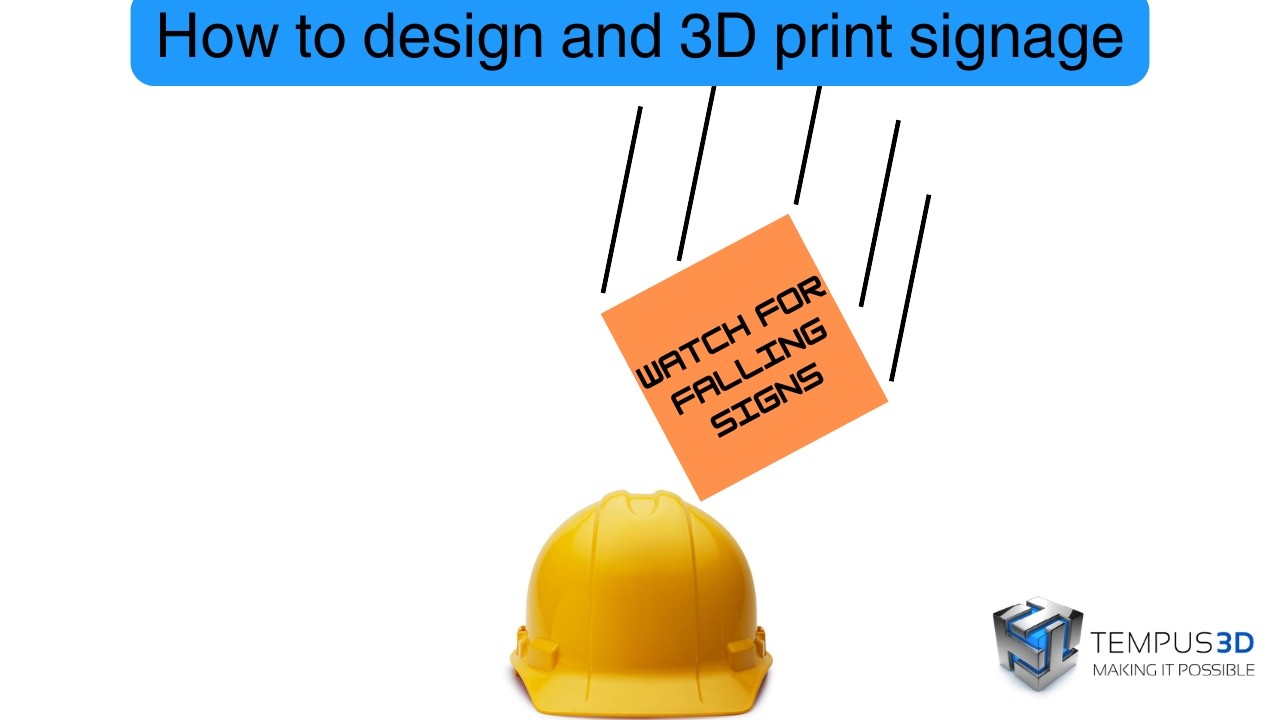
I wanted to show off some of the signage we have been doing with our FDM printer. I detail my process step by step, from Canva to Makerlab to Bambu Studio The makerlab tool that makes the magic happen can be found here https://makerworld.com/en/makerlab/imageToKeychain?from=makerlab __________________________________________________________________________________________ Tempus3D is an HP certified 3D printing service bureau based in British Columbia, Canada, offering advanced additive manufacturing solutions tailored to your production needs. We specialize in HP MJF, Sinterit SLS, and Formlabs SLA technologies. Have a project in mind? Contact us at info@tempus3d.com to learn how we can support your next build. Let’s make it possible!
- Sustainability in Manufacturing | Fix it in post Ep. 02 ft. Kailey Allan
In this episode, I'm at the Selkirk Technology Access Center joined by Kailey Allan, who in an Instructor with a background in engineering and industrial design, we are going to be discussing Sustainability in Manufacturing and Design. You can find her here https://www.instagram.com/wedge.workshop/ https://www.instagram.com/selkirkcollegedfab/ https://www.instagram.com/selkirkinnovates/ __________________________________________________________________________________________ Tempus3D is an HP certified 3D printing service bureau based in British Columbia, Canada, offering advanced additive manufacturing solutions tailored to your production needs. We specialize in HP MJF, Sinterit SLS, and Formlabs SLA technologies. Have a project in mind? Contact us at info@tempus3d.com to learn how we can support your next build. Let’s make it possible!
- 3D Printed Chain Lifts Car Off the Ground
HP put industrial 3D printing to the test by lifting a 1995 Avalon with a 3D printed chain link produced using HP’s Multi Jet Fusion technology. The chain was printed in under an hour and weighs just 0.25 pounds. Check out this video to see how it performed. __________________________________________________________________________________________ Tempus3D is an HP certified 3D printing service bureau based in British Columbia, Canada, offering advanced additive manufacturing solutions tailored to your production needs. We specialize in HP MJF, Sinterit SLS, and Formlabs SLA technologies. Have a project in mind? Contact us at info@tempus3d.com to learn how we can support your next build. Let’s make it possible!
- Embracing Modular Engineering and 3D Printing in Robotics
Robotics and automation are shifting toward a new design philosophy. Machines must be lighter, modular, easily reconfigurable, and quicker to deploy. At the same time, customers demand shorter development cycles, flexible automation cells, and systems that adapt to evolving production needs. This pressure has pushed engineering teams to embrace digital manufacturing workflows. Industrial 3D printing is a core enabler of modular design and reconfigurable manufacturing systems (RMS). Why Modular Engineering Is Becoming the New Standard Modern robotics platforms are moving away from bespoke, monolithic machines. They are transitioning to standardized, swappable subassemblies. Examples of Modular Components Interchangeable gripper modules Swappable end-of-arm tooling (EOAT) Vision-system or sensor pods Universal actuator or drive modules Modular automation stations that plug into larger cells These systems depend on interfaces and housings that must evolve rapidly. New features, accessories, or customer-specific requirements are introduced frequently. Traditional CNC or molded parts cannot match the design agility required. How 3D Printing Enables Modular System Architecture Additive manufacturing, especially HP Multi Jet Fusion (MJF), accelerates the development of modular hardware. It enables: Fast Customization of Interfaces and Geometries Engineers can quickly revise mounting patterns, airflow features, wiring pathways, or connector housings. They can do this without reinventing an entire production process. Cost-effective Low-volume Production Modules that ship in runs of 10–100 units are too small for injection molding but ideal for MJF. Instant Versioning and Incremental Updates V1.0 for testing, V1.1 for pilot programs, V2.0 for release—no tooling changes, no delays. Integrated Functionality 3D printing allows multiple features to be built into one printed component: Cable routing Cooling channels Sensor pockets Structural ribs Alignment features Embedded fastener seats All produced in a single print cycle. Reconfigurable Manufacturing Systems (RMS): Where Modularity Meets Flexibility Reconfigurable manufacturing systems require equipment that can be adapted, scaled, or retooled with minimal downtime. Robotics is the backbone of RMS. Additive manufacturing makes rapid reconfiguration possible. 1. Fast, Low-cost Adaptation New bracket? Revised mount? Updated fixture? Engineers can design it in the morning and print it that night. 2. Tooling That Evolves with the Product As product dimensions or features change, new tooling can be produced on demand. There is no need to wait weeks for machining. 3. One-off or Short-run Customization 3D printing excels in edge cases where only one or two custom parts are needed. 4. Distributed, On-demand Production With Tempus 3D’s digital manufacturing platform, companies can scale production in Canada or ship across North America with consistent quality. How Tempus 3D Supports Modular & RMS Development Tempus 3D helps robotics and automation manufacturers accelerate development through: ✔ Canadian, IP-protected manufacturing ✔ Design-for-additive (DfAM) engineering support ✔ Rapid prototyping (3–5 day turnaround) ✔ On-demand scaling and no-tooling production ✔ Low-volume and bridge production for modular systems Conclusion: The Future of Robotics Modular engineering and reconfigurable manufacturing systems are defining the next generation of robotics. Industrial 3D printing is the key enabler. It allows engineers to iterate faster, customize interfaces, and scale production without the constraints of traditional tooling. Tempus 3D delivers the speed, precision, and flexibility needed to bring modular automation platforms to market more quickly and cost-effectively. In this evolving landscape, I see the potential for innovative solutions that can transform how we approach manufacturing. By leveraging advanced technologies, we can create systems that not only meet current demands but also anticipate future needs. __________________________________________________________________________________________ Tempus3D is an HP certified 3D printing service bureau based in British Columbia, Canada, offering advanced additive manufacturing solutions tailored to your production needs. We specialize in HP MJF, Sinterit SLS, and Formlabs SLA technologies. Have a project in mind? Contact us at info@tempus3d.com to learn how we can support your next build. Let’s make it possible!