

Professional 3D Printing for Architects, Artists & Designers
Architecture, art, and design projects often require physical parts that communicate form, scale, proportion, surface detail, and material intent. Tempus 3D helps professional teams move from CAD files and digital models to accurate 3D printed parts using industrial additive manufacturing technologies and material-specific production guidance.
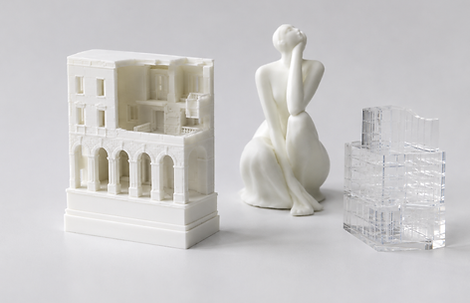
Fine Detail & Smooth Surface Quality
For projects where visual clarity matters, Tempus can support fine features, smooth surfaces, and detailed model components.
Best technology fit
Use cases
-
Sculpture prototypes
-
Architectural details
-
Presentation components
-
Visual models
-
Clear or smooth resin parts
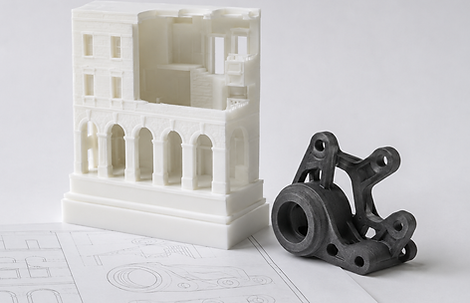
CAD-to-Print Production Support
Tempus helps clients choose the right process and material based on the supplied file, required detail, size, surface finish, strength, and intended use.
Best technology fit
Use cases
-
CAD uploads
-
File review
-
Material selection
-
Process selection
-
Application-specific production guidance

Durable Parts for Handling & Display
Not every creative or architectural part is purely visual. Some need to be handled, assembled, mounted, transported, or reused.
Best technology fit
Use cases
-
Display components
-
Interior design parts
-
Architectural model assemblies
-
Reusable presentation parts

Low-Volume Custom Parts Without Tooling
For one-off, small-batch, or custom creative parts, 3D printing allows teams to produce complex components without moulds, tooling, or traditional fabrication setup.
Best technology fit
Use cases
-
Custom fixtures
-
Decorative accents
-
Design prototypes
-
Display parts
-
Limited-run creative components
Arts & Architecture Applications

Architectural Scale Models
Use for:
-
Building models
-
Site models
-
Concept models
-
Presentation model components
-
Planning and stakeholder review models

Interior Design Components
Use for:
-
Custom accents
-
Decorative details
-
Fixture prototypes
-
Branded spatial elements
-
Site-specific design parts

Sculpture Maquettes & Art Prototypes
Use for:
-
Scale studies
-
Form exploration
-
Digital sculpture output
-
Art prototypes
-
Components for larger mixed-media work
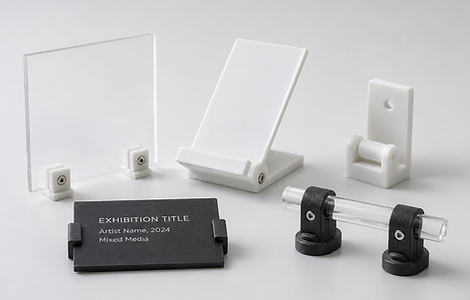
Custom Display & Exhibit Parts
Use for:
-
Display mounts
-
Presentation components
-
Gallery support pieces
-
Retail or product display parts
-
Educational model components
Choose the Right 3D Printing Process for the Project
Different arts and architecture applications require different balances of detail, surface finish, size, durability, flexibility, and cost.

_edited.jpg)


Materials for Models, Prototypes & Creative Components

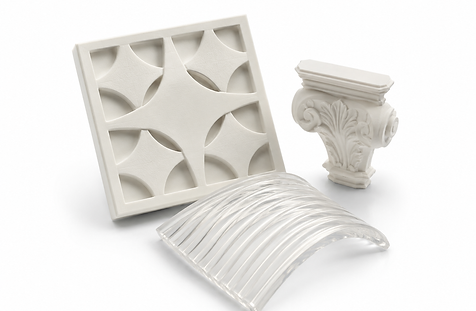
High-Detail Resin Parts
Use for:
-
Fine detail
-
Smooth surfaces
-
Visual prototypes
-
Sculpture studies
-
Architectural details
-
Clear or presentation-focused components
Technology:
Concept & Form Study Materials
Use for:
-
Early-stage models
-
Large rough prototypes
-
Design studies
-
Low-cost iteration
Technology:

Durable Nylon Components
Use for:
-
Display parts
-
Model assemblies
-
Fixtures
-
Custom components
-
Parts requiring handling or repeat use
Technology:
-
Select Laser Sintering (SLS)

Finish-Ready Printed Parts
Use for:
-
Paint preparation
-
Dyeing
-
Surface smoothing
-
Presentation improvement
Post-processing options may be available depending on material and application.


Key Benefits for Arts & Architecture Projects
Improve Design Communication
Physical models help teams communicate form, scale, proportion, and spatial relationships more clearly than drawings or renderings alone.
Produce Complex Custom Forms
Additive manufacturing supports detailed features, organic shapes, internal geometry, and custom components that may be difficult or inefficient to produce by hand.
Speed Up Design Iteration
3D printing allows teams to test ideas, compare design options, and move from CAD file to physical review faster than many traditional fabrication methods.
Match Materials to the Application
Tempus helps select the right 3D printing process and material based on the project’s need for detail, strength, scale, surface finish, durability, or cost efficiency.